Quick Summary Table
| Disadvantage | Why It Matters in India |
|---|---|
| High upfront cost | EVs cost ₹10–20 lakh more than similar petrol/diesel cars |
| Poor charging infra | Outside metros, public chargers are rare or broken |
| Long charging time | 45 mins to 12 hours vs 2 mins for refuelling |
| Range anxiety | Real-world range drops in heat, hills, or with AC on |
| Battery replacement cost | ₹6–8 lakh after 7–8 years = almost a new car |
| Low resale value | Second-hand EVs sell at 40–50% loss in 3 years |
| Grid dependency | Most electricity still from coal; not truly green |
| Safety concerns | Battery fire risks in hot Indian summers |
| Limited models | No proper affordable long-range EV under ₹15 lakh |
| Service network | Only available in top 30–40 cities |
Introduction
Electric vehicles are finally going mainstream in India. You see Nexon EVs on Delhi roads, and your neighbour probably just booked an MG Comet. The government is pushing hard—FAME subsidies, lower GST, green number plates. And honestly? EVs are fun to drive. Silent, instant torque, zero tailpipe smoke.
But let’s be real.
Every senior automotive journalist worth their salt will tell you: EVs are not for everyone in India today. Not yet.
If you live in a tier-2 city, park on the street, or take long highway trips every month, an EV might become a headache—not a hero. I’ve driven every mainstream EV sold in India (from the Tata Nexon EV Max to the BYD Atto 3). I’ve also been stranded once near Jhansi with a dead battery and no working charger for 40 kilometres.
So before you swipe your credit card, read this complete, honest guide to the disadvantages of EVs in India. No marketing fluff. Just ground reality.
Understanding the Real Disadvantages of EV Ownership in India
Let’s break down each problem in detail, with real numbers and Indian context.
1. High Initial Purchase Price – Still a Luxury for Most
EV vs Petrol: The Price Gap Shocks You
The biggest hurdle is the ex-showroom price. Compare:
- Tata Nexon EV (base): ~₹14.5 lakh
- Tata Nexon petrol (base): ~₹8 lakh
That’s ₹6.5 lakh extra. For the same car, same space, same features.
Even after subsidies, a decent long-range EV (above 300 km real range) starts at ₹15 lakh. The affordable ones—like MG Comet or Tiago EV—have very small real-world range (120–160 km). You can’t take them on highways.
Why is it so expensive?
Batteries. Lithium-ion cells are imported (mostly from China). Add GST of 5% on EVs but 28% on EV components—makes local manufacturing costly. Also, automakers invest huge R&D into EVs, and they pass that cost to you.
Loan and Insurance Are Costlier
EV loans have 30–50 basis points higher interest than petrol cars because banks see them as higher risk. Insurance premiums are 15–20% higher due to expensive battery replacement risk.
Expert take: If you are on a tight EMI budget, stick to a petrol or CNG car for now. Wait 2–3 years for EV prices to fall.
2. Charging Infrastructure – The Harsh Ground Reality
Only 4–5 Cities Have Good Coverage
Delhi, Mumbai, Bengaluru, Pune, Hyderabad—these five cities have decent public chargers. Outside them? A wasteland.
I drove from Bengaluru to Goa last year. After Kolhapur, I found exactly two fast chargers—one was broken, the other had a 2-hour wait. This is not an exception. This is normal.
As of early 2026, India has roughly 12,000 public chargers. Compare that to 80,000+ petrol pumps. And most chargers are slow (7 kW to 22 kW), not fast (50 kW+). Slow chargers take 5–7 hours for a full charge.
Apartment Living = Nightmare for EV Owners
If you live in an apartment without reserved parking or an old building with weak electrical wiring, installing a home charger is a battle. Your society might say no (“fire risk”). Or the electricity meter doesn’t support 7 kW load.
Many EV owners in Mumbai and Gurgaon tell me they charge at office or drive 10 km to the nearest mall.
Charging Time vs Refuelling Time
| Petrol/Diesel | EV | |
|---|---|---|
| Time for full tank/charge | 2 minutes | 45 min (fast) to 12 hours (home slow charger) |
| Weekly time lost | ~10 min | 3–8 hours |
That’s not trivial. If you have an emergency—sick child, late-night airport run—you can’t “quick-charge” in 2 minutes.
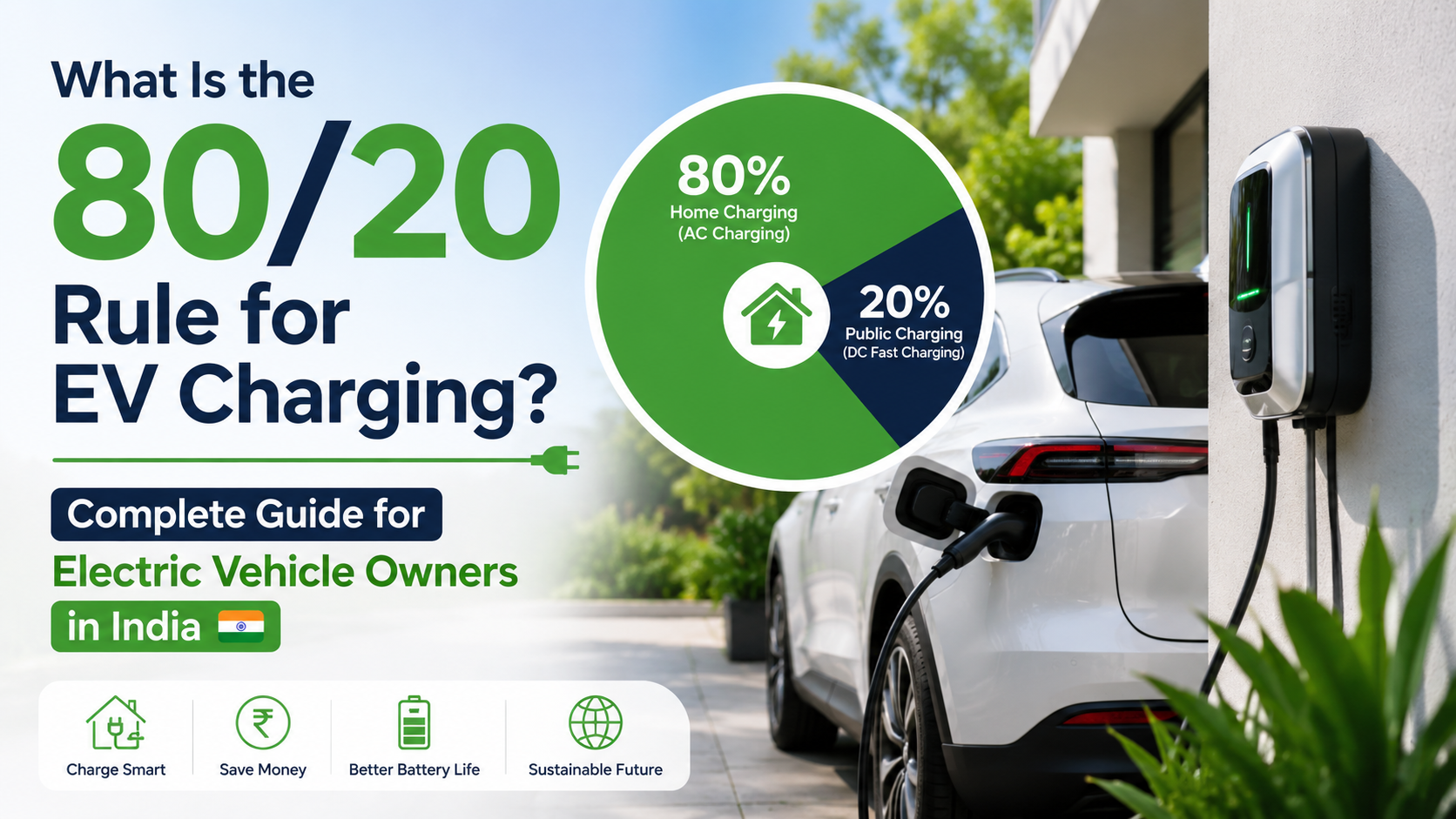
Practical advice: Only buy an EV if you have a dedicated parking spot with a 15A power socket. And never buy an EV as your only car if you travel outstation monthly.
3. Range Anxiety – Real-World Numbers vs ARAI Claims
The ARAI Lie
Every EV in India advertises ARAI-certified range. Example:
- Tata Nexon EV LR: ARAI says 465 km
- Real-world city with AC: 280–310 km
- Real-world highway at 90 km/h: 240–260 km
That’s almost 40% less. Why? Because ARAI tests at low speeds (around 30 km/h) without AC. In India’s heat, you will use AC. On highways, you will drive faster. Both kill range.
Heavy Traffic + High Temperature = Range Killer
In Delhi summer (45°C), the battery management system runs cooling fans. That consumes power. So does the AC blower at full speed. You can lose 15–20% range easily.
Also, every hill climb eats battery fast. If you live in Himachal, Shillong, or any hilly region, expect range to drop 30% compared to plains.
Real story: A friend took his MG ZS EV from Dehradun to Mussoorie (35 km uphill). He started with 80% charge. Reached with 28%. That’s 52% battery for 35 km!
4. Battery Replacement Cost – The Hidden Time Bomb
After 7–8 Years, You Might Cry
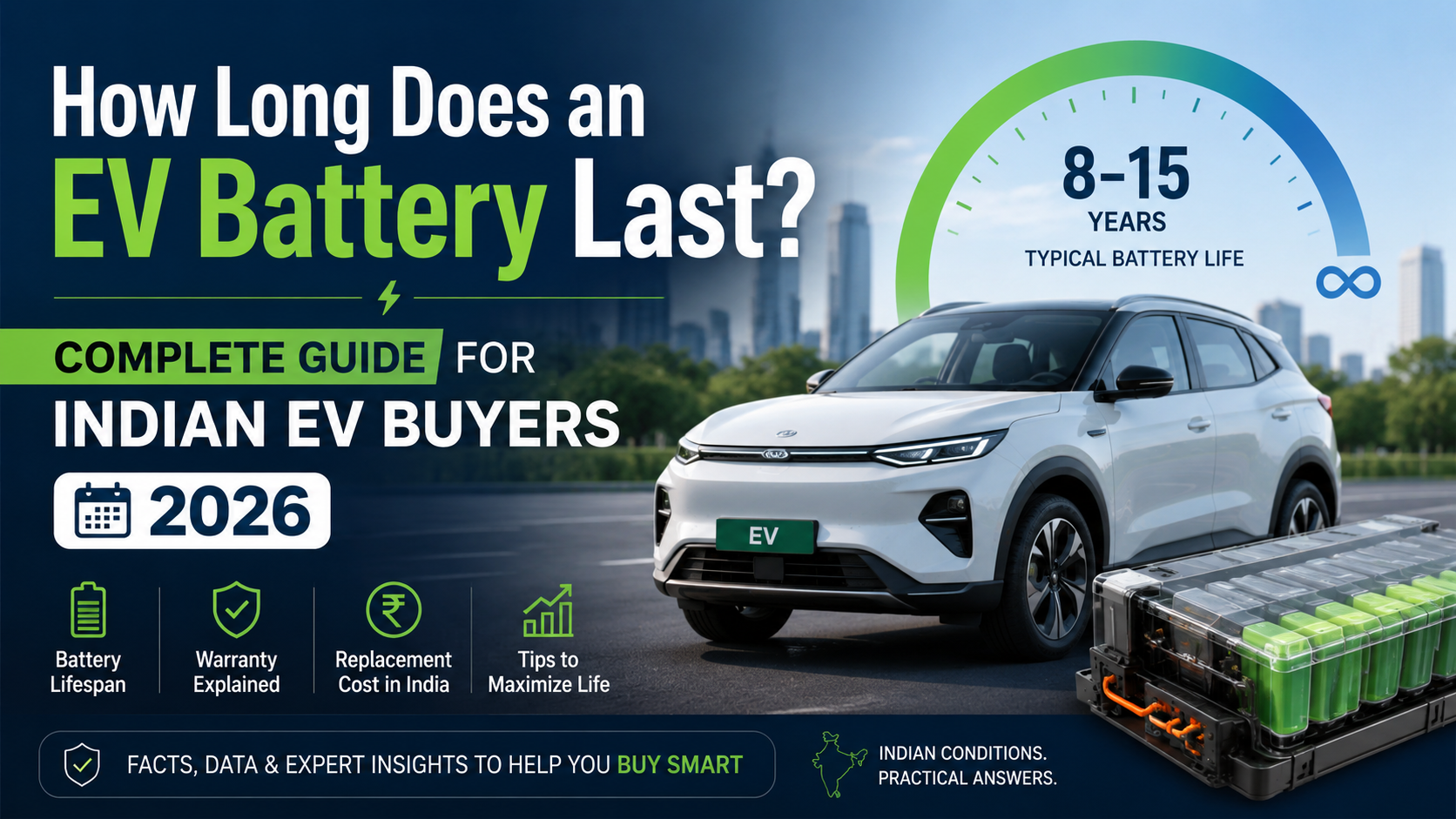
EV battery warranty is typically 8 years or 1.6 lakh km. After that, degradation is real. At 10 years, capacity may drop to 60–70%. Your 300 km range becomes 180 km.
Replacing the battery pack costs:
- Tata Nexon EV: ₹6.5–7.5 lakh
- MG ZS EV: ₹8–9 lakh
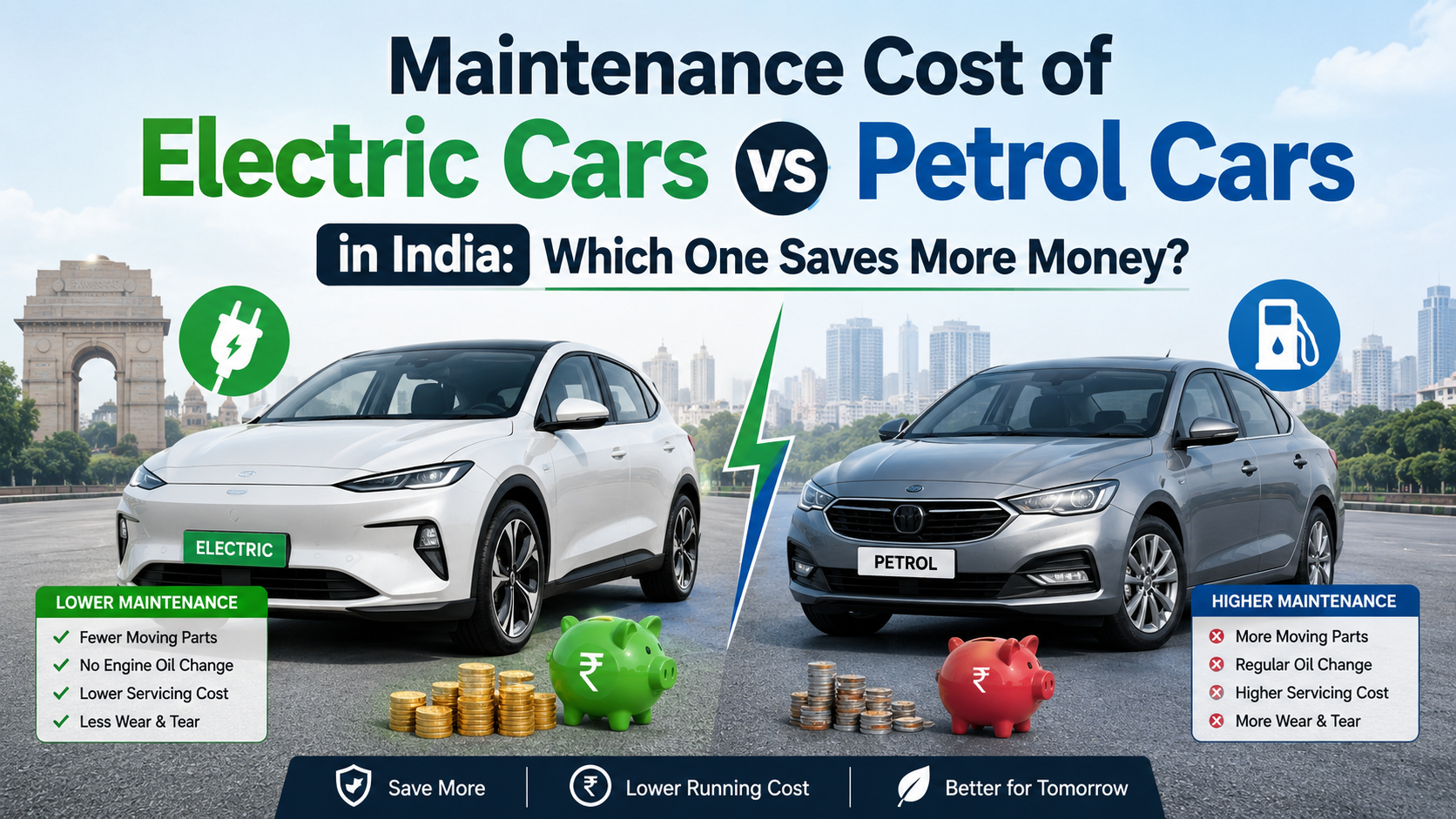
- Kona Electric: ₹7–8 lakh
That’s almost 50–60% of the car’s new price. Most people will simply scrap the car.
Some automakers offer battery subscription (like MG’s eHUB) but that adds monthly cost—₹2,500 to ₹6,000 per month.
No Third-Party Battery Market Yet
In petrol cars, you buy an engine from a local mechanic. In EVs, you cannot buy a refurbished battery easily. No standardisation. Every brand uses its own battery shape, cooling system, and BMS software.
Recommendation: Only keep an EV for 5–6 years. Sell it before battery warranty ends. That’s the financially smart move.
5. Low Resale Value – EVs Depreciate Like Phones
Nobody Wants a Used EV
Check OLX or Cars24 today. A 2021 Tata Nexon EV with 40,000 km sells for ₹8–9 lakh. Its original price was ₹15 lakh. That’s 40% loss in three years. A same-age petrol Nexon loses only 20–25%.
Why?
- Buyers fear battery degradation
- No standard way to test battery health (unlike a compression test for engines)
- New EV models launch every year with better range at same price
EV Loan Negative Equity Risk
If you buy a ₹20 lakh EV with a 5-year loan, after 3 years you may owe ₹10 lakh but the car’s value is only ₹8 lakh. That means you cannot sell without paying extra cash.
Verdict: Lease an EV if possible. Or buy only if you plan to use it until it dies. Resale is a losing game today.
6. Environmental Question Mark – Is an EV Really Green?
This may shock you. India generates 73% of its electricity from coal. An EV charged from coal power actually emits more CO2 per kilometre than a hybrid or even a small petrol car over its lifetime—when you count battery manufacturing emissions.
Study by IVL Swedish Environmental Institute: Making one EV battery (60 kWh) emits 8–10 tonnes of CO2. That’s equal to driving a petrol car for 40,000 km.
So your EV starts its life with a “carbon debt”. In India’s coal-heavy grid, you need to drive 80,000–100,000 km just to break even vs a petrol car.
And battery recycling in India is still primitive. Most old batteries end up in unregulated scrap yards.
Honest take: EVs are cleaner eventually—but only after 5–6 years of use. And only if grid becomes greener. Don’t buy an EV mainly for “saving the planet” in India today. Buy it for running cost savings (₹1 per km vs ₹6–7 for petrol).
7. Safety Concerns – Fire Incidents and High-Voltage Risk
Remember the EV fire videos on Twitter? Ola scooters burning? Tata Nexon EVs catching fire in Pune and Mumbai?
High ambient temperature (45°C+) combined with fast charging or a minor battery defect can cause thermal runaway. Lithium fires are extremely hard to put out—water doesn’t work; you need special foam.
Also, EV batteries sit under the floor. If you drive over a big rock or a sharp pothole (very common in India), it can puncture the battery case. Result? Fire or complete failure.
Repairing a damaged battery case is not like replacing a fuel tank. It costs lakhs.
Safety tip: Avoid buying the first batch of any new EV. Wait 6 months for real-world feedback. And never fast charge when the battery is above 90% in peak summer.
8. Limited Options – No Affordable Long-Range EV
As of 2026, India has no proper EV under ₹15 lakh offering 350 km+ real highway range. The MG Comet and Tiago EV are city-only cars (130–160 km real range). The Nexon EV LR is close but still expensive.
Want a proper family EV with 450 km+ range? You need ₹25–35 lakh—BYD Atto 3, MG ZS EV, or Hyundai Ioniq 5. That’s luxury sedan money.
Also, no electric 7-seaters under ₹30 lakh. No electric estate cars. No affordable electric hot hatchbacks. Choices are very limited.
9. Service and Spare Parts – Only Big Cities Get Love
If you live in Lucknow, Nagpur, or Coimbatore—you have a service centre. But if you’re in Jhansi, Kolhapur, or Siliguri? You may have to drive 150 km to the nearest EV-certified workshop.
And spare parts? A new motor or inverter can take 3–6 weeks to arrive. Because most EV components are imported. Your car could be “dead” for a month.
Even a small fender-bender can cost double a petrol car’s repair because of sensors and wiring.
10. Who Should NOT Buy an EV in India Right Now?
Let me be blunt. Do NOT buy an EV if:
- You don’t have a dedicated parking spot with a 15A socket.
- You take outstation trips (200 km+) more than once a month.
- You live in a very hot area (Rajasthan, central UP) without covered parking.
- You change cars every 3–4 years (resale loss is brutal).
- Your monthly driving is less than 1,000 km. (Petrol makes more financial sense.)
- You live in a town without a fast charger within 50 km.
Who Should Buy an EV in India (Honest Answer)?
- You have another petrol car for long trips.
- You have home charging and drive 1,500–2,000 km monthly (saving ₹8,000–10,000 in fuel).
- You live in Delhi-NCR (EVs are exempt from odd-even and have subsidies).
- You keep cars for 8+ years and don’t care about resale.
- You want the instant torque and silent drive (pure joy).
Comparison Table – EV vs Petrol vs Hybrid (India 2026)
| Parameter | EV (e.g., Nexon EV) | Petrol (Nexon) | Hybrid (Hyundai Ioniq) |
|---|---|---|---|
| On-road price | ₹15.5 lakh | ₹9.2 lakh | ₹23 lakh |
| Range/full tank | 280 km real | 550 km | 1100 km |
| Fuel cost per km | ₹1.0 | ₹6.8 | ₹3.2 |
| Time for refill | 1 hour (fast) to 8 hours | 2 mins | 2 mins |
| Service cost/year | ~₹3,000 | ~₹6,000 | ~₹8,000 |
| Resale after 4 years | 40–50% loss | 25–30% loss | 30–35% loss |
| Best for | City + short highway | All-round | Highway + city |
Future Outlook – When Will EV Disadvantages Reduce?
By 2028–29, expect:
- Sodium-ion batteries (cheaper, safer, but lower energy density)
- More local manufacturing (reducing cost by 30%)
- 50,000+ public chargers (govt target)
- Better resale data and battery health certificates
- Affordable long-range EVs under ₹12 lakh
Until then, be a smart early adopter—not a frustrated one.
Frequently Asked Questions (FAQs)
1. What is the biggest disadvantage of EV in India?
The biggest disadvantage is charging infrastructure outside big cities. Even if you have a home charger, interstate travel becomes stressful and unreliable. The second biggest is high upfront cost.
2. Is an EV worth buying in India in 2026?
Yes—but only if you meet the conditions: home charging, second car for highways, monthly driving >1,500 km, and you live in a tier-1 city. Otherwise, a hybrid or CNG car makes more sense today.
3. How much does it cost to replace an EV battery in India?
For a mainstream EV like Tata Nexon or MG ZS, battery replacement costs ₹6–9 lakh including labour and GST. That’s almost the price of a new small petrol car (i10, Ignis).
4. Do EVs have lower resale value than petrol cars in India?
Yes. EVs lose 40–50% of their value in 3–4 years, while petrol cars lose 25–30%. The main reasons: battery degradation fears, rapid tech changes, and limited second-hand buyers.
5. Are EVs safe in Indian summers?
Generally yes for modern EVs from Tata, MG, BYD. But avoid parking in direct sunlight for hours, and don’t fast charge immediately after a long highway run in 45°C heat. Stick to shaded charging when possible.
6. Can I take an EV from Delhi to Jaipur?
Yes, if you have a 350 km+ ARAI range EV (like Nexon EV LR or MG ZS EV). Plan a 45-min fast charge stop at a reliable charger (use PlugShare app). But in peak summer with AC full, you may need two stops.
7. Is an EV cheaper than petrol over 5 years in India?
Calculate: EV saves ~₹5.5 per km in fuel. If you drive 1,500 km/month, that’s ₹99,000 saved per year. Over 5 years = ₹4.95 lakh saved. But you paid ₹6 lakh extra upfront. So you break even after ~6 years. If you drive less, petrol is cheaper.
Conclusion
Electric vehicles are the future—no doubt. But “future” is not “today for everyone in India”.
After testing every EV on sale and speaking to hundreds of owners, my honest advice as a senior automotive journalist is this:
Buy an EV only if you have a dedicated parking spot with electricity, a second petrol car for highways, and you drive over 1,500 km monthly inside a big city.
Otherwise, wait. Or buy a hybrid. Or a CNG. Or a simple petrol car.
The technology is improving fast. Battery prices are falling. Charging stations are coming. By 2028, most of the disadvantages listed here will be history.
But today? Don’t fall for hype. Do the math. Check your usage. And only then take the electric plunge.
Because the worst feeling is not running out of charge on a dark highway—it’s regretting a ₹15 lakh decision that doesn’t fit your life.
Drive smart. Stay charged. And always keep a real-world range buffer of 20%.