India’s electric vehicle (EV) market is growing rapidly. With rising fuel prices, government support, and increasing awareness about sustainable transportation, more people are switching to electric cars and electric two-wheelers. However, the success of EV adoption depends heavily on the availability of charging infrastructure.
This is where Tata Power plays a significant role. Tata Power has built one of India’s largest EV charging networks and continues to expand its presence across cities, highways, commercial properties, residential societies, and public locations.
For entrepreneurs and investors, starting a Tata Power EV charging station can be a promising business opportunity. Many people are searching for information about Tata Power EV charging station franchise apply online, investment costs, profitability, and application procedures.
This detailed guide explains everything you need to know before investing in an EV charging station business in India.
Tata Power EV Charging Station Franchise Overview
| Particulars | Details |
|---|---|
| Company | Tata Power |
| Industry | Electric Vehicle Charging Infrastructure |
| Business Type | EV Charging Station Partnership |
| Investment Range | Depends on charger type and location |
| Land Requirement | Varies by charger capacity |
| Target Customers | EV Car Owners, Fleet Operators, Commercial Users |
| Application Mode | Online |
| Revenue Source | Charging Fees |
| Future Growth Potential | Very High |
What is Tata Power EV Charging Station Franchise?
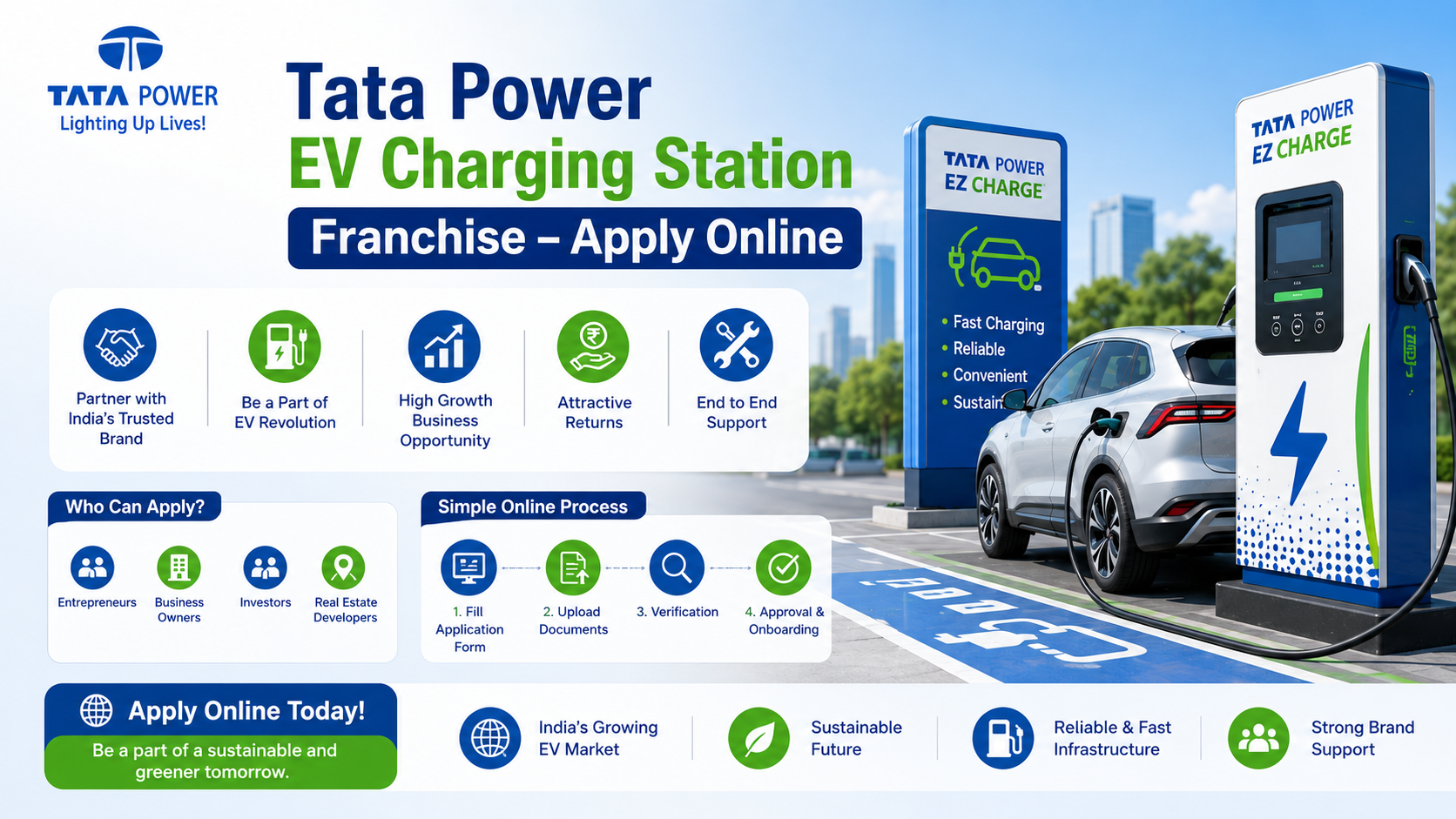
A Tata Power EV charging station partnership allows individuals, businesses, property owners, and commercial establishments to install EV charging infrastructure on their premises.
Instead of a traditional franchise model like a restaurant chain, Tata Power generally works through partnerships, charging solutions, and charging network collaborations.
These charging stations can be installed at:
- Shopping malls
- Hotels
- Restaurants
- Office complexes
- Fuel stations
- Residential societies
- Highway locations
- Commercial parking areas
As EV adoption increases, charging stations are becoming an important part of India’s transportation ecosystem.
Why Choose Tata Power for EV Charging Business?
Tata Power is among the most trusted energy companies in India. It has established a strong reputation in the EV charging sector through continuous expansion and technological innovation.
Strong Brand Value
The Tata name is associated with trust, reliability, and quality. Customers often prefer charging stations operated under a well-known brand.
Large Charging Network
Tata Power has installed thousands of charging points across India, covering major cities and highways.
Growing EV Market
India’s EV market is expected to witness significant growth over the next decade, creating long-term opportunities for charging station operators.
Technical Support
Partners often benefit from installation support, maintenance guidance, and network integration.
Future-Proof Business
Unlike traditional fuel businesses, EV charging infrastructure is aligned with the future direction of the automotive industry.
Tata Power EV Charging Station Franchise Apply Online Process
The application process may change over time, but generally follows these steps.
Step 1: Visit Official Tata Power EV Website
Go to the official Tata Power EV charging platform and explore partnership opportunities.
Step 2: Submit Business Details
Provide information such as:
- Name
- Contact details
- Business profile
- Property ownership details
- Proposed location
- Available electrical infrastructure
Step 3: Site Evaluation
The company may assess:
- Accessibility
- Traffic volume
- Parking availability
- Power supply capacity
- Commercial viability
Step 4: Technical Assessment
Engineers evaluate whether the location can support EV charging equipment.
Step 5: Agreement and Approval
After successful evaluation, partnership terms and installation plans are discussed.
Step 6: Installation
Charging equipment is installed and integrated into the charging network.
Step 7: Business Operations
The station becomes operational and starts serving EV customers.
Investment Required for Tata Power EV Charging Station
The investment amount depends on multiple factors.
Factors Affecting Cost
- Type of charger
- Number of charging points
- Electrical infrastructure
- Civil work requirements
- Location
- Power connection upgrades
Approximate Investment Range
| Charger Type | Estimated Investment |
|---|---|
| AC Charger | ₹1 lakh – ₹5 lakh |
| DC Fast Charger | ₹10 lakh – ₹40 lakh+ |
| Multi-Charger Setup | ₹25 lakh – ₹1 crore+ |
These figures are approximate and can vary depending on project requirements.
Land Requirement
Land requirements depend on charger type and expected traffic.
Small Charging Point
A few parking slots may be sufficient for basic charging services.
Commercial Charging Hub
Large locations with multiple charging bays require more space and proper vehicle movement planning.
Ideal locations include:
- Highways
- Metro cities
- Commercial districts
- IT parks
- Residential communities
Infrastructure Requirements
Before applying, ensure your location can support charging infrastructure.
Electrical Connection
A stable power supply is essential.
Parking Space
Vehicles should be able to enter, charge, and exit comfortably.
Safety Systems
- Fire safety equipment
- Electrical protection systems
- CCTV monitoring
- Emergency shutdown systems
Internet Connectivity
Many charging stations require online connectivity for monitoring and payment processing.
Types of EV Chargers
Understanding charger categories helps estimate investment and revenue.
AC Chargers
Suitable for:
- Homes
- Apartments
- Offices
- Hotels
Advantages:
- Lower cost
- Easier installation
- Lower maintenance
DC Fast Chargers
Suitable for:
- Highways
- Commercial hubs
- Fleet operations
Advantages:
- Faster charging
- Higher customer turnover
- Greater revenue potential
Revenue Model and Profit Potential
The biggest question investors ask is whether EV charging stations are profitable.
Revenue Sources
Charging station operators earn through:
- EV charging fees
- Fleet charging contracts
- Commercial partnerships
- Additional services
Factors Influencing Profit
- Location quality
- Number of EV users
- Charger utilization rate
- Electricity costs
- Operating expenses
Long-Term Potential
While profits may initially be moderate, increasing EV adoption can improve utilization and revenue over time.
Key Features of Tata Power EV Charging Solutions
Smart Charging Technology
Charging sessions can be monitored digitally.
Mobile App Integration
Users can locate stations and manage charging sessions.
Wide Network Coverage
Stations are connected through a growing national network.
Multiple Payment Options
Digital payment methods improve customer convenience.
Real-Time Monitoring
Operators can track charger performance and usage.
Advantages of Starting an EV Charging Station
Growing Industry
EV adoption is increasing every year.
Government Support
Central and state governments continue promoting EV infrastructure.
Sustainable Business
Supports cleaner transportation and reduced emissions.
High Future Demand
Demand for charging stations is expected to rise significantly.
Brand Recognition
Working with Tata Power enhances customer trust.
Disadvantages and Challenges
High Initial Investment
Fast chargers can require substantial capital.
Dependence on EV Adoption
Revenue growth depends on local EV penetration.
Power Infrastructure Costs
Electrical upgrades may increase project expenses.
Location Dependency
Poor locations may experience low charger utilization.
Technology Upgrades
Charging technology evolves rapidly and may require future updates.
Tata Power EV Charging Station vs Competitors
| Feature | Tata Power | Other Private Operators |
|---|---|---|
| Brand Trust | Excellent | Varies |
| Network Coverage | Extensive | Limited in some regions |
| Technical Expertise | Strong | Depends on operator |
| Customer Recognition | High | Medium |
| Expansion Plans | Aggressive | Varies |
Tata Power’s major advantage is its strong brand presence and established charging ecosystem.
Government Policies Supporting EV Charging Infrastructure
India’s EV ecosystem is supported by multiple initiatives.
FAME Scheme
The Faster Adoption and Manufacturing of Electric Vehicles program has helped accelerate EV growth.
State EV Policies
Many states provide incentives for EV infrastructure development.
Reduced Environmental Impact
Governments encourage charging station deployment to reduce pollution and dependence on fossil fuels.
Who Should Invest in a Tata Power EV Charging Station?
This business opportunity may be suitable for:
Property Owners
Commercial property owners can monetize parking spaces.
Petrol Pump Operators
Fuel stations can diversify revenue streams.
Hotel Owners
Guests increasingly seek EV charging facilities.
Mall Operators
Charging attracts customers who spend time while vehicles charge.
Entrepreneurs
Investors looking for future-oriented businesses may consider EV charging infrastructure.
Expert Analysis
The EV charging industry in India is still in its growth phase. This means early investors have an opportunity to establish prime locations before competition intensifies.
However, investors should avoid making decisions solely based on future projections. The success of a charging station depends heavily on:
- Strategic location
- Traffic volume
- Local EV population
- Infrastructure readiness
- Operational efficiency
A well-located charging station near highways, business districts, or residential communities is likely to perform significantly better than one in a low-demand area.
Therefore, site selection should be the top priority before investing.
Frequently Asked Questions (FAQs)
1. Can I apply for a Tata Power EV charging station franchise online?
Yes. Interested applicants can explore partnership opportunities through Tata Power’s official EV charging platform and submit location details for evaluation.
2. How much investment is required?
Investment varies depending on charger type, location, electrical infrastructure, and project size. Costs can range from a few lakhs to several crores for large charging hubs.
3. Is EV charging station business profitable?
Profitability depends on charger usage, EV adoption in the area, electricity costs, and location quality. Long-term prospects are generally positive.
4. Do I need commercial land?
Commercial locations are often preferred, but residential societies, hotels, offices, and other properties may also be suitable depending on the project.
5. Which charger generates more revenue?
DC fast chargers typically generate higher revenue due to faster charging and greater customer turnover.
6. Does Tata Power provide technical support?
Technical support and project guidance may be available depending on the partnership model and project scope.
7. Is the EV charging market growing in India?
Yes. India’s EV market continues to expand, increasing the demand for reliable charging infrastructure.
Conclusion
The Tata Power EV charging station business represents one of the most promising opportunities in India’s emerging electric mobility sector. As electric vehicles become more common on Indian roads, the demand for reliable charging infrastructure will continue to grow.
Before applying, investors should carefully evaluate location quality, power availability, investment capacity, and expected EV traffic. While the business requires patience and proper planning, the long-term growth potential remains strong.
For entrepreneurs seeking a future-ready business aligned with India’s transition toward sustainable transportation, a Tata Power EV charging station can be a valuable investment opportunity. Choosing the right location, understanding operational costs, and focusing on customer convenience will be the key factors that determine long-term success.